Introduction
When you search up the word artist online, you’ll see that there’s a clear common denominator; “a person who creates or practices the arts.”
What does it mean to be an artist? Is it someone that’s experienced with art concepts, someone that’s able to build ideas beyond most people’s creative abilities, or is it simply a person that enjoys drawing in its essence? All of those can be true, just as much as they can be untrue. Art is a contradicting form—a paradox—it’s not supposed to follow a strict guide. That’s why it may seem so daunting to go into, especially when the community is filled with those who are advanced and know what they’re doing. One may feel like an outsider and see others being so far ahead that they believe they’re falling behind in their work or that they might never catch up. You can apply that to practically everything in the world, the feeling of being out of place. And maybe that’s the whole point of art.
If you ask ten random people “Who’s your favorite artist?”, the chances they give you completely different answers is extremely likely. One may answer SZA, while another tells you Monet. Neither is inherently wrong. The arts are made up of three main areas; visual, auditory, and literary. Looking at the roots of the words, you can tell what each means. Visual arts are those you build by creating from sight, a form of art that can be tangible or even intangible as long as it can be seen. Auditory arts have to do with audio, sound; it’s music. Literary arts are based on literature, books, poems, novels, etc. Anyone, with the right materials, can excel in any of these fields if they work on their skills, but only when they begin to build that structure.
The Thing that Holds You Back
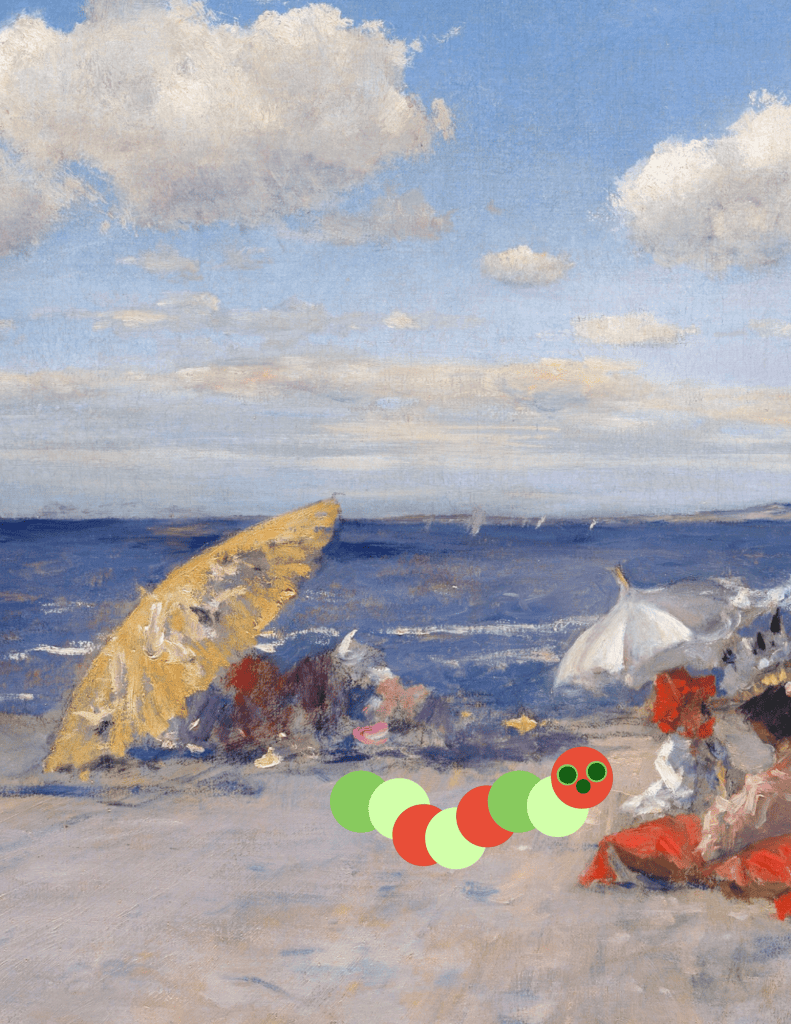
Everyone starts off as a beginner—a caterpillar before it becomes a butterfly–in anything they work towards. It doesn’t happen overnight. It happens because of the simple act of waiting and slowly building progress. Whether it’s learning how to drive, sew, play an instrument, that path will always have a beginning. You’ll only be able to truly look back at how far you’ve come down the road after you’ve built it, not by simply imagining yourself being there. The phrase “it’s easier said than done” is a statement I believe is a fact. Because we as humans have a habit of lying to ourselves. We say things we don’t mean, give promises we can’t keep, and fail to achieve what we said we could complete, sometimes on purpose, sometimes not. There’s no reason other than the reality that our failure to fulfill the manifestations we say aloud is due to our negligence to complete them. Sometimes it’s not because we lack talent, or skill. It’s because we lack belief. We convince ourselves that we can’t succeed and make that our reality. Is it because it’s intimidating? The fear of not being as good as others? Perhaps. But what is fear outside of being a social construct? We feel fear to avoid pain. That’s how our bodies are programmed and have been for centuries. But we also let it control us and our perceptions of things. Most of the time that emotion is felt in order to not feel the worst of them all. Disappointment. In yourself, in your abilities, in your growth. That fear is what stagnates your potential to become something you can’t picture. And because you can’t picture it, you’re scared. I always tell others to not let their fear of failing stop them from creating their beginning. Them listening is out of my control. That also applies to you.
Learning the foundations of art is an important step in improving your artwork. However, knowing what an artist is and what it takes to become one is something that slips the minds of many and without that knowledge people often lose motivation and the will to grow.
Point is..people’s definitions of an artist are all different. Dwelling on the question “Am I an artist?” while you practice art is your first error because that’s the seed that plants your doubt that will evidently grow. Being heavily experienced and successful in any of the foundational areas isn’t a need to title yourself as an “artist”. It’s just another label among the thousands that exist in our society.
Core Four
Art itself has its principles that build its structure like balance, emphasis, movement, rhythm, etc., so what about those of the ones who utilize them? The main principles that I believe are what make up the foundations of an artist are the core four: Curiosity, Consistency, Nerve, and Awareness.
Curiosity. The characteristic of wanting to constantly learn. Things catch your attention, you ask yourself why, and later figure out the answer before doing it all over again. A curious person is one who’s intuitive and wondrous, maybe a little reckless at times; someone who cares about their craft so much they want to explore ways to improve it. Experimentation is key in art. How will you know how good a certain medium can adhere to you if you never try using it? How can you mix colors to create the one you want if you don’t learn color theory? Answering these kinds of questions by building experience can save you time and money. You wouldn’t need to buy thirty different oil paints when you can work better with seven and make all those colors yourself. The better artist isn’t the one who already knows everything, it’s the one who never wants to stop learning. Expanding your domain is crucial; limiting yourself will only lead to your failure.
Consistency is a noun that describes the manner of creating a steady, recognizable pattern in behavior and habit. Essentially, it’s doing things, ranging from hobbies like sports or music to actions like a nightly routine or working out four times a week, in the same way over a period of time. Building consistency requires a plethora of aspects but the one that stands out to me in this case is will. The will to actually form that progress; it’s the will to make a promise or self declaration you hold yourself to, with the expectation of taking accountability when you don’t meet it. In the context of art, consistency is more important than one can imagine. For example, making one work each week with a different medium. One week you can use pencil, the next paint, which can then follow oil pastels. Working your way through it, no matter how small or minimal the progress may seem each day, over time creates a big difference. Most, however, don’t see that difference because they don’t have the will to create it.
When you think of the word ‘nerve’, two things should probably come up in your head: the actual medical term, and audacity. Nerve usually has more of a negative connotation to a slightly neutral one depending on the context, which could itself change the type of connotation completely. That’s exactly why I wanted to use the term. Rather than using something like ‘courage’ or ‘bravery’, nerve is crossing those boundaries in a way that’s more selfish than the previous terms mentioned. To have the nerve to do something can mean to not care or really think about the effects, and to just do the action because you feel it’s what’s needed or right. This kind of trait can really help someone in art since it’s all about experimentation and trial and error. Art is personal, so you need to be selfish. Make the things you want to make; don’t hold yourself back because you believe it doesn’t fit what “real” art is. Such a thing does not exist. Fear is unnecessary when you let it only limit your artwork from becoming truly unique and separate itself from commonality. When you’re first starting out, technicality matters less because your main goal is to find the kind of person you are in art, find your style, the mediums you excel in, etc. That process doesn’t have a guideline. To still do it takes nerve.
The last main principle of the core four is awareness. Like in any situation, having a well-rounded awareness about yourself and your abilities in art is extremely important. It’s the only way to build a sustainable path to growth when you can determine the areas you need to target to improve. If you want to make yourself a stronger artist, the very first step is actually saying you’re lacking in your understanding of a certain concept. Awareness is also needed to help you be more grounded and balance out the nerve in the artist. Getting lost and confused because you don’t know where to start or go next is pretty common for most people in retrospect; let your awareness guide you.
The only thing it takes to be an artist is to create. It is to build, to push yourself over your limits, to experiment, to test, to have the passion and motivation to want to make something that belongs to you and only you. It is to look over at your piece after spending the past few hours—even days—indulging in it and the thought of, “That’s mine, I made that”, crosses your mind. It is to see the progression, in the growth in your work, in your abilities, in yourself over time and to continue to grow and learn despite it all. An artist is someone who calls themselves one and believes it. The odyssey of the arts is one that doesn’t have an ending as long as you make sure the fire keeps on burning; that responsibility lies in yourself. There will always be someone that might be better than you but their journey is not yours so the purpose of comparison simply does not exist. It’s not as complicated as one may make it seem. Make that thing that belongs to you, because the only way to become an artist is to start creating and build your beginning. Be the contradiction that proves yourself wrong.
-AB
Leave a Reply